Some stories have lasted three hundred years because they work. A child asks for them again the next night, and the night after that. What has changed is that your child can now be the one the story is about.
The classics we make
Each of these is retold from the original book or ballad — not from a film — and each is written and illustrated twice, so the words and the pictures match the child reading them.
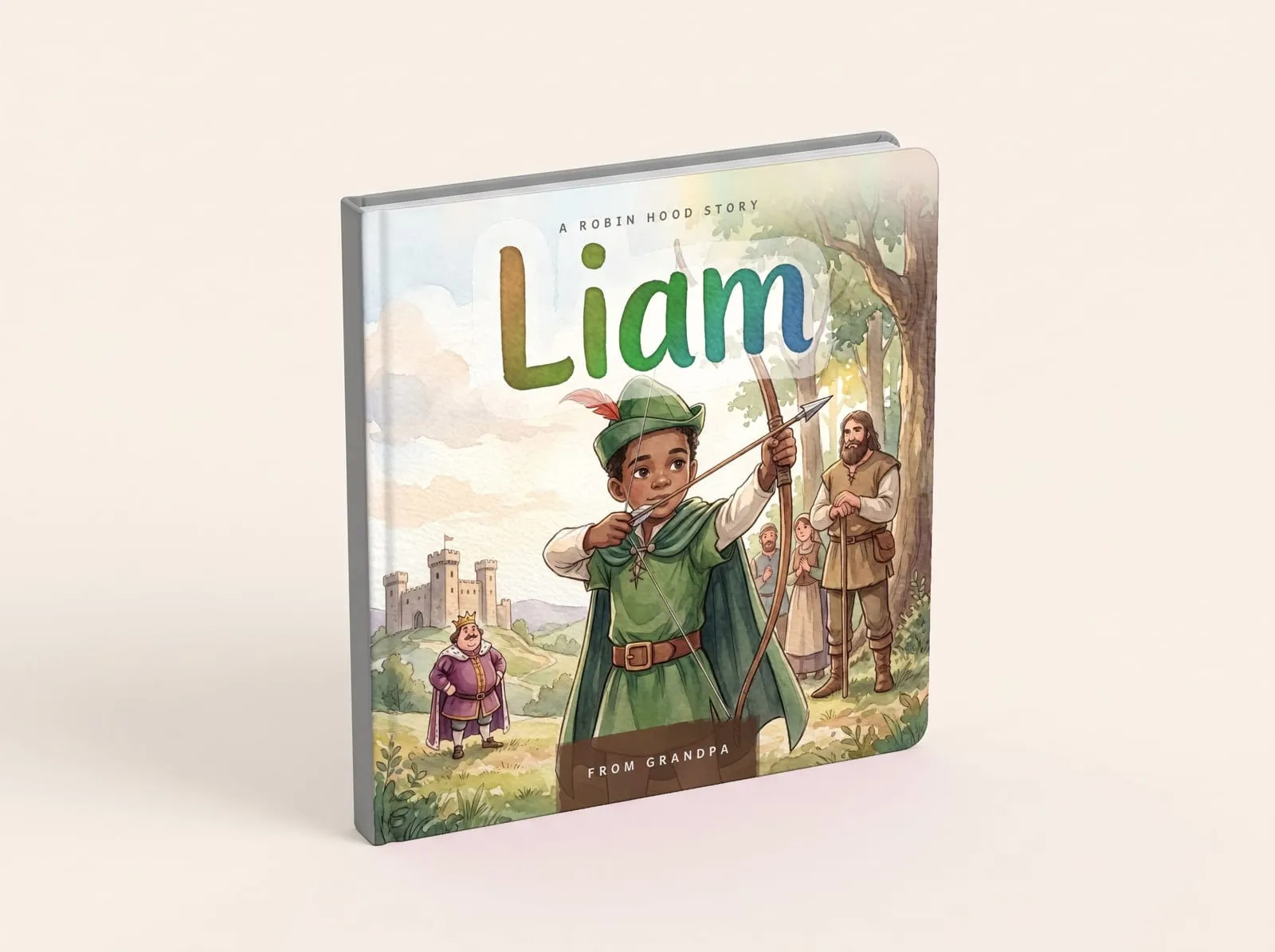
- Robin Hood — the greenwood, the Sheriff, and giving away what you could have kept.
- Peter Pan — Neverland, pirates, and looking after the people who follow you.
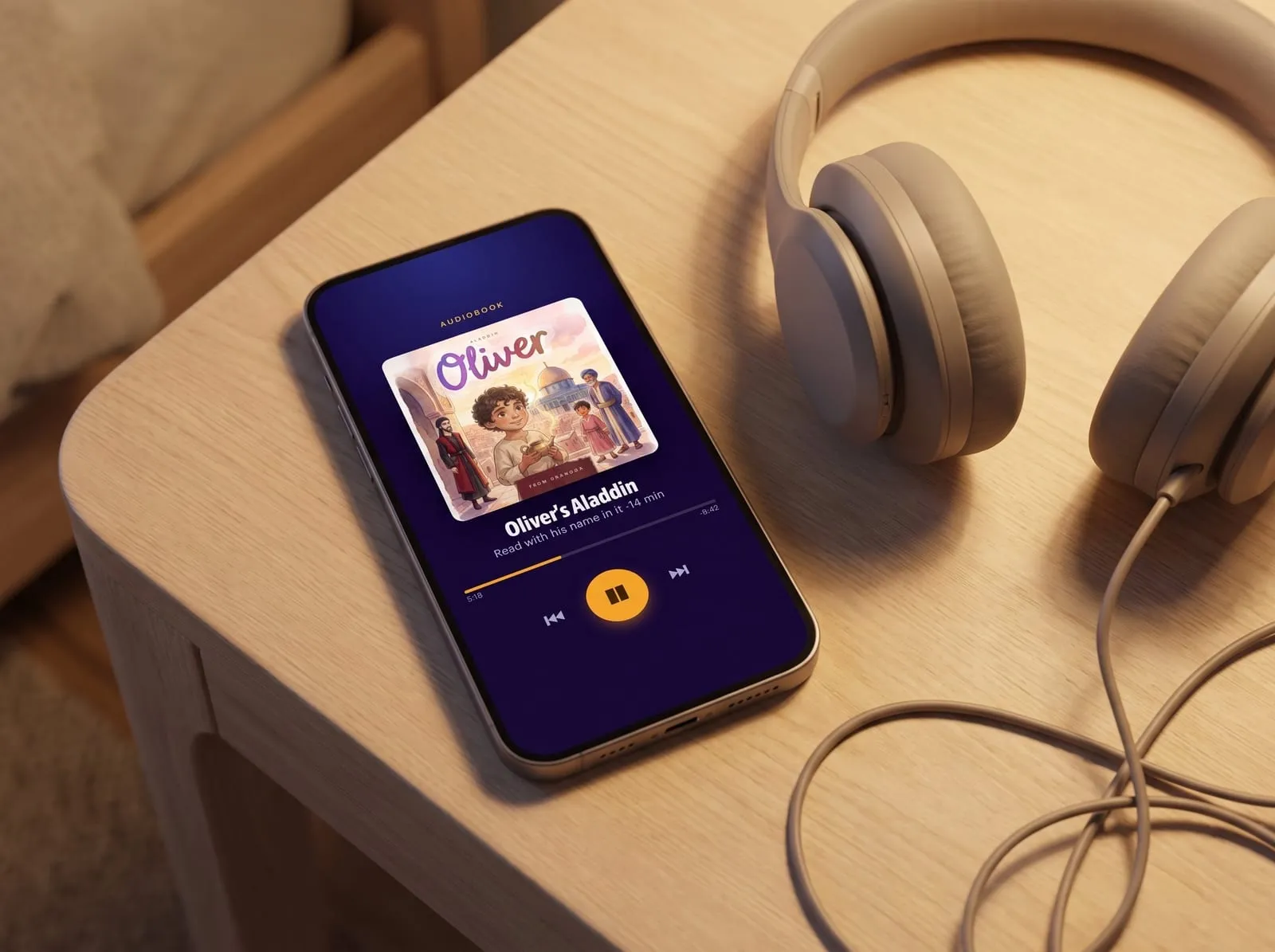
- Aladdin — a lamp, three wishes, and working out what is actually worth wishing for.
- The Wizard of Oz — a long road, odd companions, and kindness to people unlike you.
Why the old stories still work at bedtime
They were built to be told out loud. The rhythm carries, the shape is familiar, and the turn in the middle is one a four-year-old can follow without anything being explained.
They also carry their meaning without preaching it. Courage, kindness, friendship and consequence are already inside these tales — which is why every one of our books ends with After the Adventure, a few questions drawn from what actually happened, rather than a moral bolted onto the last page.
Which one for which age
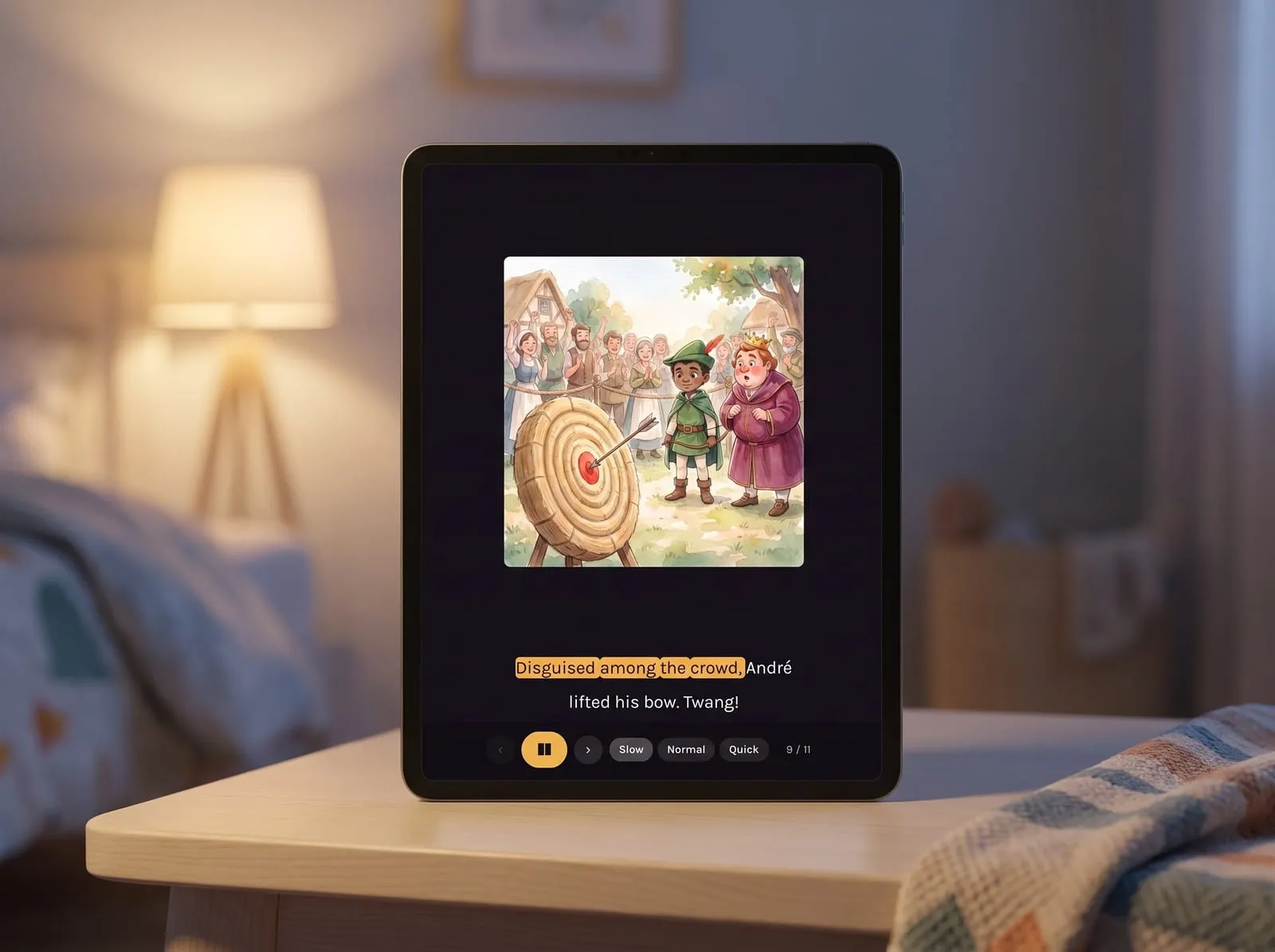
All four suit roughly ages 3 to 8 when read aloud. The verse is written for a beginning reader — short, single-clause lines a child can follow along with — and the read-along lights each word as it is read, so the same book works whether they are being read to or reading it themselves.
Reading them with your child in the story
The difference between hearing a classic and being in one is not small. Your child’s name is in the text, and the hero on every spread is illustrated to look like them.
Start a book from any page on this site — you will see their name in the real story text before you pay anything.